

5 Signs You Need Brake Service (And What It Costs to Wait)
Brake problems don’t announce themselves loudly until they’re serious. A small issue left unaddressed can quickly become an expensive repair. But here’s the good news: if you catch the warning signs early, brake service is straightforward and affordable. Ignore them, and costs climb fast. It’s worth knowing the difference.
Quick Links
Sign #1: Is Your Car Making Squealing or Grinding Noises?
✦Quick Answer
Squealing means brake pads are wearing thin. Grinding means they’ve worn through to metal. Get service immediately. The longer you wait, the bigger the repair bill.
What the Sounds Mean
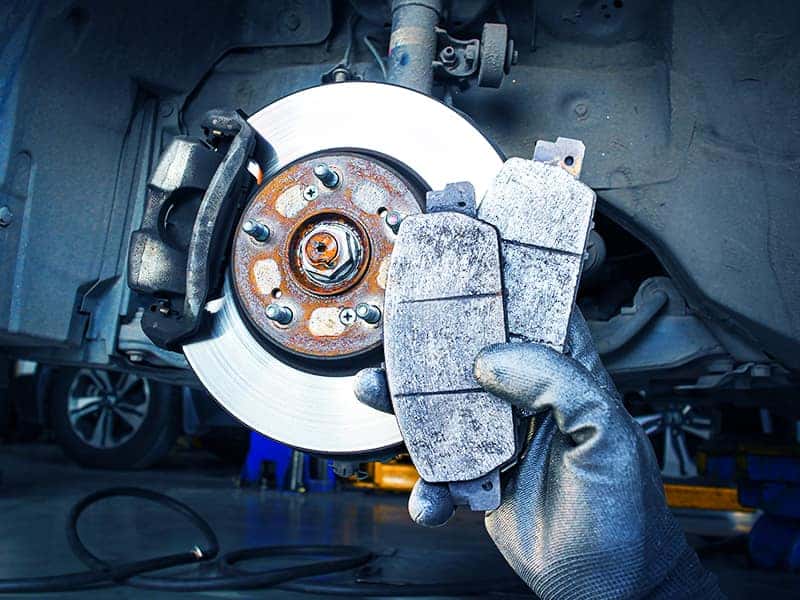
Brake noise falls into two categories, and they tell you very different things. A high-pitched squeal is your car’s way of saying the brake pads are getting close to done. It’s intentional. Modern brake pads include a wear indicator: a small metal tab that creates that squeal when the pads are nearing the end of their lifespan. Think of it as an early warning system designed to get your attention before things get expensive.
Grinding is different. It’s louder, it’s more serious, and it needs immediate attention. When you hear grinding, the brake pads have worn completely through to the backing plate. Now it’s metal on metal: the pad backing is making direct contact with the rotor. This damages both components and significantly reduces braking efficiency. Keep grinding going and you’re looking at a much bigger repair.
Why Early Service Saves Money
Here’s how the costs escalate if you ignore the warning signs:
- Squealing caught early: $150–$300 for brake pad replacement
- Pads ignored, rotors damaged: $400–$900 for pads and rotors
- Grinding for weeks or months: $1,200+ for pads, rotors, and possibly caliper work
The brake pad is built to wear down first. It’s the sacrificial component protecting the rotor underneath. Once those pads are gone, the rotor takes the braking force directly and deteriorates fast. That’s why that early squealing is worth paying attention to. It’s literally the system telling you to stop in and get it looked at before the bill doubles.
What to Do
Hearing squealing? Schedule a brake inspection within the week. Hearing grinding? That should be within a day or two. The longer you wait, the more you’re paying.
Sign #2: Is There a Brake Warning Light on Your Dashboard?
✦Quick Answer
It could be something simple (low fluid, $10 fix) or something serious (system failure, $300-$1,200+ repair). Don’t ignore it. Get a diagnostic and find out which one.
Understanding the Warning Light
A brake warning light doesn’t tell you specifically what’s wrong. It just tells you something in the brake system needs attention. It could be any of these:
- Low brake fluid (the most common cause)
- Brake pad wear sensor activation
- Parking brake engaged
- A fault in the brake system itself
What It Actually Costs
The repair price depends entirely on what’s causing the light:
- Low brake fluid: $10 if topped off
- Professional diagnostic: $50–$150
- System repairs: $300–$1,200+, depending on what’s found
What to Do
Don’t ignore the light. Schedule a diagnostic appointment. Yes, you’re paying a small diagnostic fee, but that’s a bargain compared to what happens if you drive on a compromised brake system. And plenty of times it’s just low fluid. Quick fill, you’re done, and you’ve got peace of mind.

Sign #3: Does Your Vehicle Pull to One Side When Braking?
✦Quick Answer
Your brakes could be imbalanced. If one side is stopping harder than the other get it serviced immediately.
What Unbalanced Braking Feels Like
When you press the brake pedal and the car pulls hard to one side instead of stopping in a straight line, that’s unbalanced braking. Many drivers initially think it’s a steering problem, but in most cases, it’s your brakes. It’s one of the more noticeable warning signs, and you’ll definitely feel it.
What’s Causing It
One side of the vehicle is stopping harder than the other. Usually it’s one of these:
- One brake pad wearing faster than the other
- A caliper that’s stuck and not releasing properly
- Uneven brake fluid distribution to the brake lines
When braking force is uneven, your stopping power is compromised and your directional control decreases. In an emergency braking situation, this becomes a real problem. You need even stopping power on both sides of the vehicle. When that balance is lost, your stopping distance increases and your control decreases.
What This Typically Costs
- Uneven brake pad replacement: $200–$400
- Caliper repair or replacement: $150–$600+
- Other brake system issues: $100–$400+
Sign #4: Does Your Brake Pedal Feel Spongy or Soft?
✦Quick Answer
Spongy pedal means air in lines ($50-$150 fix) or leak ($100-$400+). Worst case: master cylinder failure ($300-$800+). Get it checked immediately.
What a Spongy Pedal Means
The brake pedal should have firm resistance when you press it. A spongy pedal that requires multiple pumps to build stopping power is a red flag. It means the hydraulic system isn’t maintaining proper pressure, and there are a few different reasons this happens.
What Could Be Wrong
Air in the brake lines: If brake fluid is low or there’s a small leak somewhere, air can get into the system. Air is compressible, which is why the pedal feels mushy. Get the air bled out and normal pedal response usually comes back.
Brake fluid leak: Brake fluid doesn’t evaporate. If the fluid level is dropping, there’s a leak somewhere. It could be at a caliper, the master cylinder, or a connection point. A leak compromises the entire system’s ability to function, and you’ve got to find it and fix it.
Master cylinder failure: The master cylinder is the heart of your brake system. It converts your foot pressure into hydraulic pressure that stops the car. If it’s beginning to fail, the pedal loses firmness and braking power decreases.
What This Typically Costs
- Brake system bleeding (air removal): $50–$150
- Brake fluid leak repair: $100–$400+
- Master cylinder replacement: $300–$800+
What to Do
A spongy brake pedal requires professional attention right now. Don’t drive the vehicle longer than necessary. Schedule service as soon as possible. This isn’t one to put off.
Sign #5: Does Your Brake Pedal Go All the Way to the Floor?
✦Quick Answer
This is an emergency and you will need to call for a tow. Do not drive the vehicle in this condition.
The brake system operates on hydraulic pressure. When the pedal goes to the floor, that pressure is gone. Usually it’s a major leak or complete master cylinder failure. Without that pressure, the braking system can’t function. The car is not safe to drive.
If This Happens While You’re Driving
Try pumping the pedal several times. Sometimes you can build enough pressure for one or two more stops. Once the car is stopped, leave it stopped. Don’t drive it further. Call for roadside assistance or have it towed to a shop.
What This Costs
Repairs typically range from $200–$1,200+ depending on the cause. But honestly, cost isn’t the priority here. Safety is. Get the car towed and get it fixed.
How Often Do You Need Brake Service?
✦Quick Answer
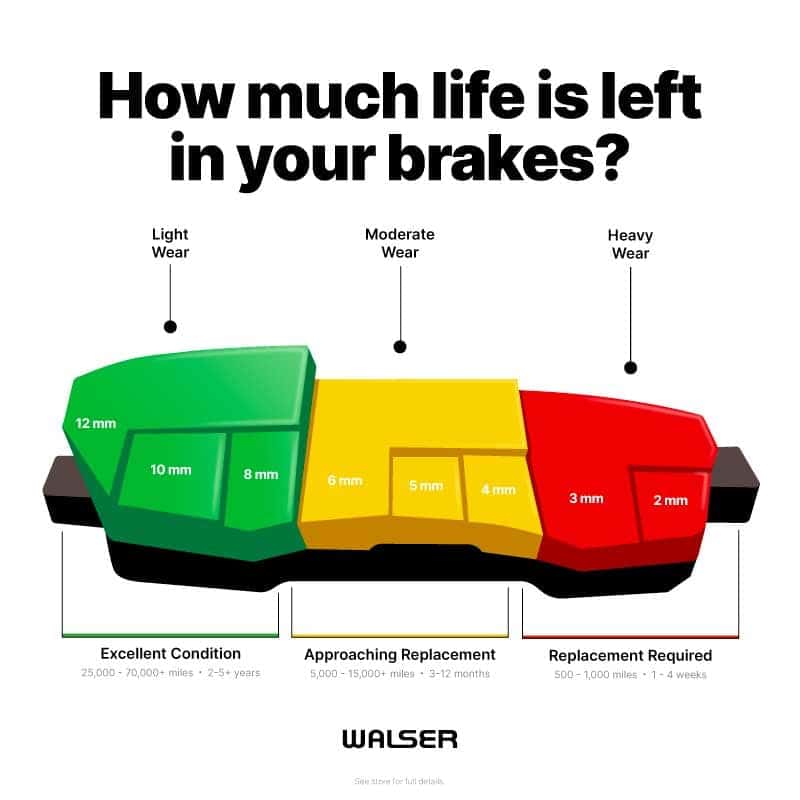
Most cars need new brake pads every 25,000 to 70,000 miles. In Minnesota, get a brake inspection annually or every 25,000 miles, whichever comes first. Winter salt and ice are rough on brakes.
Typical Brake Pad Lifespan
Most vehicles need brake pads replaced somewhere between 25,000 and 70,000 miles. But how often you actually need service depends a lot on how and where you drive.
What Wears Brakes Faster
- Stop-and-go city driving: City driving and frequent braking wear pads faster than highway miles.
- Hilly terrain: Constant downhill braking accelerates wear.
- Heavy vehicles or towing: Trucks and vehicles towing trailers put greater demands on the brake system.
- Winter driving: Cold weather, salt, and corrosion all accelerate brake wear. This is a big one in Minnesota.
Your Brake Service Schedule
For Minnesota drivers, brake inspection should happen annually or every 25,000 miles, whichever comes first. Catching wear early prevents emergency repairs and keeps you safe.
Here’s the good part: brake inspections don’t have to be a separate trip. During every oil change we do, we perform a complimentary brake system check. You’re getting your brakes evaluated regularly without any extra effort. If we spot early warning signs, we’ll let you know before things become serious.
What to Do If You Notice These Brake Service Signs
Step 1: Don’t Ignore It
The first instinct is to hope the problem goes away on its own. It won’t. It gets worse, and costs go up along the way.
Step 2: Get a Professional Diagnosis
Don’t try to self-diagnose brake issues. A certified mechanic can:
- Listen to the noises and identify where they’re coming from
- Assess how the pedal feels and responds
- Perform a complete brake system inspection
- Give you a clear cost estimate before any work starts
A typical brake inspection takes less than 30 minutes.
Step 3: Schedule the Repair
This is where a lot of people hesitate. You get a repair quote and the natural reaction is to delay. But here’s the thing: postponing repair doesn’t save money. It costs money. A $200 brake pad job becomes a $600 job when rotors get damaged. That $600 job becomes a $1,500+ job when other components fail. Early service is affordable. Neglected service gets expensive fast.

The Bottom Line
Brakes are fundamental to vehicle safety. They protect you, your passengers, and everyone else sharing the road. When brakes show warning signs, professional attention is essential.
Early brake maintenance is affordable. Neglected brake maintenance becomes expensive. A brake issue caught and fixed within a week might cost a few hundred dollars. That same issue ignored for several months can cost over a thousand.
If any of these warning signs appear (noise, warning lights, pulling, soft pedal, or pedal failure), get professional evaluation. Early intervention saves money and, more importantly, keeps you safe.
Ready to Get Your Brakes Checked?
Don’t wait on brake problems. Financing options are available through Sunbit at most Walser service centers, so you can get your brakes fixed now and spread payments over time rather than waiting and letting costs pile up.
Find a Walser location near you and schedule your brake inspection today. Whether it’s a squealing pad or a warning light, we’ll get you sorted.
Frequently Asked Questions
What are the most common brake warning signs?
The five biggest ones are squealing or grinding noises, a brake warning light, the vehicle pulling to one side when braking, a spongy or soft pedal, and the pedal going to the floor. Any of these warrant an immediate professional inspection.
How much does brake service cost in Minnesota?
Brake service costs typically range from $150–$300 for brake pad replacement, $400–$900 for pads and rotors, and $1,200+ for extensive brake system repairs. Costs depend on your vehicle and how much damage has been done.
How often should I get a brake inspection?
Minnesota drivers should get brake inspections annually or every 25,000 miles, whichever comes first. This preventive approach catches problems before they become expensive.
What causes worn brake pads?
Normal wear from driving causes it, but wear accelerates with stop-and-go city driving, hilly terrain, heavy vehicles, towing, and winter driving. Minnesota’s salt and ice exposure causes faster wear than many other regions.
Can I drive with a spongy brake pedal?
No. A spongy brake pedal is a serious problem. Don’t drive the vehicle. Schedule immediate service or have it towed to a mechanic.
What does it mean if my brake pedal goes to the floor?
Complete brake failure. A hydraulic pressure loss, usually from a major leak or master cylinder failure. This is an emergency. Don’t drive the vehicle. Call for roadside assistance immediately.
How can I prevent expensive brake repairs?
Get regular brake inspections, address warning signs immediately, don’t ignore brake noises, and schedule service as soon as you notice any of the five signs in this guide. Early intervention is always cheaper than emergency repairs.
Is brake service covered by warranty?
Depends on your vehicle’s warranty terms and age. Some newer vehicles have brake system coverage, but brake pads are typically considered wear items and aren’t covered by warranty. Check with your manufacturer or dealership for specifics on your vehicle.
Disclaimer: Pricing represents average estimates and may vary based on vehicle type, location, and specific repair needs. This article is educational and does not constitute professional safety advice. Always consult with a certified mechanic for brake-related concerns specific to your vehicle.
 Avoid the Sticker Shock. Buy Now Before Tariffs Take Effect! March 31, 2025 Major auto tariffs are set to take effect on April 3, and industry experts predict that new vehicle prices could rise by thousands. If you’ve been thinking about buying a…
New Vehicles, News, Used Vehicles
 What’s in My Budget: Finding a Vehicle Priced Under 10K June 25, 2024 Are you in the market for a new ride but working with a tight budget? No worries! Finding a reliable and affordable vehicle priced under $10K is possible, and we’re…
Under 10k, Used Vehicles
 How to Change a Tire (Including When the Lug Nuts Won’t Budge) June 29, 2026 A spare tire is only useful if you know how to put it on, and that is worth learning before the day you actually need it. The job is straightforward:…
How-to, Safety, Service
 Why Your Car Pulls to One Side (And How to Fix It) March 20, 2026 If your car drifts to the left or right while driving, you’re not imagining it. A vehicle pulling to one side is one of the most common issues drivers experience,…
Service, Tire Changes & Replacement, Wheel Alignment