

What is a Transmission?
And What It Actually Does for Your Car
Most drivers know the engine makes a car move. Fewer people know the transmission is what makes the movement usable.
Your engine produces power, but it does so in a very narrow operating range. If the engine were connected directly to the wheels, your car would either stall immediately or race uncontrollably. The transmission is the system that takes engine power and delivers it to the wheels in a controlled, smooth, and efficient way.
Why Your Car Needs One
An engine spins very fast, often thousands of revolutions per minute. Your wheels cannot. A vehicle needs to start from a stop, climb hills, cruise on the highway, and park. All requiring different amounts of force and speed.
The transmission adjusts the relationship between engine speed and wheel speed by changing gears. Lower gears provide strength for starting and climbing. Higher gears allow efficient cruising. Without a transmission, your vehicle wouldn’t be able to accelerate smoothly, reach highway speeds, shift into reverse, or come to a stop without stalling.
How a Transmission Works
(Without the Engineering Degree)
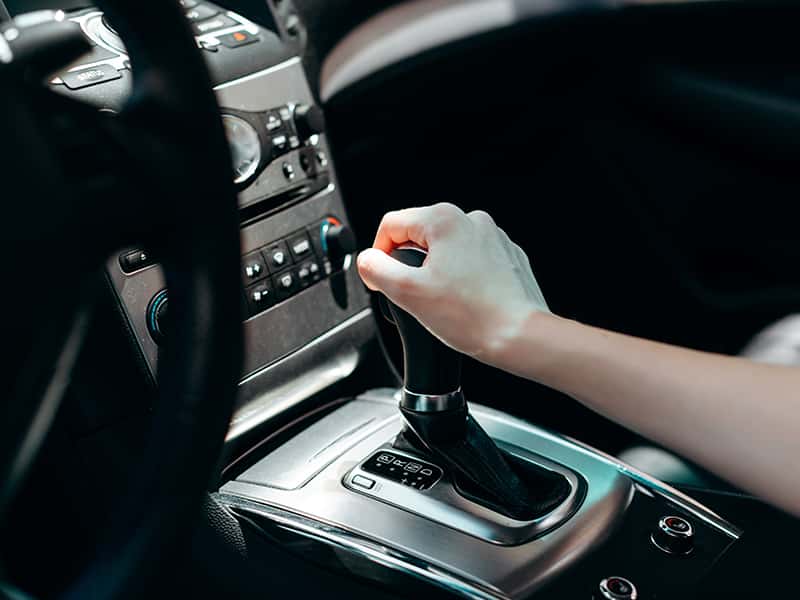
Inside the transmission is a series of gears and components that manage torque, the turning force that actually moves the car. By shifting between gear ratios, the transmission lets the engine stay in its comfortable operating range while the vehicle changes speed. At low speeds, the transmission multiplies engine force so the vehicle can move from a stop.
At high speeds, it reduces engine workload so you can cruise efficiently and save fuel. You never notice it when it works properly, and that’s exactly the point.
Automatic vs. Manual vs. CVT
Automatic Transmission
This is what most vehicles have today. The vehicle shifts gears on its own using hydraulic pressure, sensors, and computers. Modern automatics are designed for comfort, efficiency, and smooth driving.
Manual Transmission
The driver shifts gears manually using a clutch pedal and shifter. It gives more direct control but requires more driver involvement.
CVT (Continuously Variable Transmission)
Instead of fixed gears, a CVT uses a belt and pulleys to provide a continuous range of gear ratios. This helps engines stay efficient and is common in many newer vehicles.
Signs Your Transmission May Need Attention
Transmissions usually don’t fail suddenly. They give warnings first.
The most common signs include:
- delayed acceleration
- slipping between gears
- hard or jerky shifting
- grinding or whining noises
- leaking reddish or brown fluid
- burning smell
- the vehicle revs but doesn’t move normally
If you notice these, it doesn’t automatically mean a replacement is needed. Often a fluid service or inspection can prevent a much larger repair later.
Schedule a transmission inspection with our service team if you notice any of these symptoms.

Transmission Fluid: The Overlooked Maintenance Item
Transmission fluid does more than lubricate. It helps cool internal components, provides hydraulic pressure, enables smooth shifting, and protects transmission parts from wear.
Over time, fluid breaks down and collects heat and debris. When that happens, shifting quality declines and internal parts wear faster. Many modern vehicles still require transmission fluid service, even if the interval is longer than an oil change. Checking it periodically is one of the easiest ways to extend transmission life.
Why Transmission Maintenance Matters
A transmission is one of the most complex and expensive systems in a vehicle. The goal of maintenance isn’t just preventing failure, it’s preserving drivability, fuel efficiency, and long-term reliability.
Regular inspections can identify:
- fluid deterioration
- early wear
- minor leaks
- software issues
Catching those early can make the difference between a simple service and a major repair.
The Bottom Line
Your transmission quietly does one job every time you drive: it turns engine power into smooth, controlled motion. When it works, you never think about it. When it doesn’t, you notice immediately. If you’re unsure about your vehicle’s shifting, fluid condition, or maintenance schedule, our technicians can inspect the system and help you understand exactly what your car needs, no guesswork.
Schedule service or visit your nearest Walser location today.
Disclaimer: This article provides general information about vehicle systems. Maintenance needs and service intervals vary by vehicle. Always consult your owner’s manual or a qualified technician for recommendations specific to your vehicle.
 5 Signs You Need Brake Service (And What It Costs to Wait) August 7, 2026 Brake problems don't announce themselves loudly until they're serious. A small issue left unaddressed can quickly become an expensive repair. But here's the good news: if you catch the warning…
Service, Tire Changes & Replacement
 What Are The Signs of a Bad Transmission? March 16, 2026 Your vehicle’s transmission does an important job: it moves power from the engine to the wheels smoothly and efficiently. When it’s working normally, you barely notice it. When something feels…
Maintenance, Safety, Service
 What’s in My Budget: Finding a Vehicle Priced Under 10K June 25, 2024 Are you in the market for a new ride but working with a tight budget? No worries! Finding a reliable and affordable vehicle priced under $10K is possible, and we’re…
Under 10k, Used Vehicles
 Avoid the Sticker Shock. Buy Now Before Tariffs Take Effect! March 31, 2025 Major auto tariffs are set to take effect on April 3, and industry experts predict that new vehicle prices could rise by thousands. If you’ve been thinking about buying a…
New Vehicles, News, Used Vehicles