

What Oil Type Does My Car Need?
Choosing the right oil doesn’t have to be complicated. Your vehicle already has a recommended specification, and sticking with it is one of the easiest ways to take care of your car. If you’d rather not research it, we can look up your vehicle and verify the exact specification for you.
Schedule an appointment or visit your nearest Walser location.
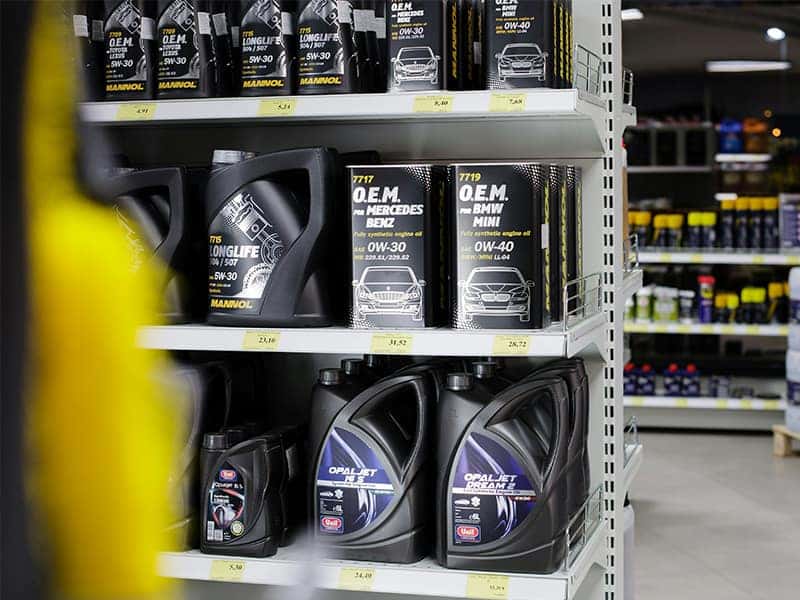
How to Choose the Right Oil
If you’ve ever stood in the oil aisle wondering which bottle to pick, you’re not alone. The labels can be confusing, and it’s hard to tell what actually matters. The helpful part is that the answer is already built into your vehicle. Here’s where you can find it:
Start with the oil cap
Open the hood and check the oil filler cap. Many vehicles print the viscosity right on top, usually something like 0W-20 or 5W-30. That number isn’t a suggestion. It’s what the engine was engineered to run.
Confirm in the owner’s manual
The manual provides the complete specification, including service intervals and required certifications. This matters because two oils can share the same viscosity and still protect very differently.
This is where most oil mistakes happen. Drivers match the number on the bottle but miss the required standard, and modern engines depend on those standards for deposit control, timing component protection, and long-term durability. Following the manufacturer’s specification isn’t overthinking maintenance. It’s preventative maintenance in its simplest form. And if you don’t want to decode labels, our service team can verify the correct oil using your VIN and take care of it correctly the first time.

Viscosity Numbers, Decoded
Viscosity simply describes how oil flows when cold and how well it protects when hot. Take 0W-20: The “0W” refers to cold-temperature flow. Lower numbers circulate faster during cold starts, which is when most engine wear occurs. The “20” describes how the oil protects once the engine reaches operating temperature. Engines today are built with tight tolerances and fast-moving components, especially turbocharged ones.
The manufacturer selected that viscosity because the engine depends on oil arriving quickly at startup and maintaining a stable protective film once warm. Thicker oil does not automatically mean better protection. It often means slower circulation where the engine needs it most.
Synthetic vs. Conventional: The Better Question
Drivers often ask whether they should use synthetic oil. A better question is whether the oil meets the vehicle’s specification. Full synthetic oil generally provides better temperature stability, cleaner operation, and improved resistance to breakdown. That’s why most modern vehicles require it. But synthetic alone isn’t the goal. The correct specification is. You don’t need permission to use synthetic oil, and switching to it is usually fine as long as the viscosity and certifications match the manufacturer’s requirement.
Just remember: choosing a premium oil that does not meet the spec is less helpful than choosing the correct one that does.
Why Certifications Matter
Viscosity tells you how thick the oil is. Certification tells you how it behaves under stress. Modern oils include additive packages designed to reduce deposits, protect timing chains, and prevent low-speed pre-ignition in turbocharged engines. These protections are verified through industry standards such as API and ILSAC ratings, and in some cases manufacturer-specific approvals.
In other words, the right oil is increasingly defined not just by weight but by performance.
A Two-Minute Check
If you want confidence without a chemistry lesson, follow this:
- Check the oil cap
- Confirm the owner’s manual
- Look for the required certification on the bottle
Or let our service department check it by VIN. It takes seconds and removes the guesswork.

Why Oil Changes Still Matter
Oil technology improved, but contamination still exists. Over time oil collects fuel residue, moisture, and microscopic metal particles. Additives break down and protection decreases. Skipping oil changes rarely causes immediate failure. Instead, it causes gradual wear: timing chain stretch, deposits, and increased oil consumption years later. Regular oil service is less about the oil itself and more about preserving the engine.
The Bottom Line
The correct oil is one of the simplest ways to protect your vehicle’s most expensive component. It affects reliability, fuel economy, and long-term ownership cost. If you’re unsure what your car needs, you don’t have to guess. Our technicians can verify the exact oil specification and perform a multi-point inspection during your visit so small concerns don’t become large repairs.
Schedule an appointment or visit your nearest Walser location.
Disclaimer: This article is for general information only. Oil specifications can vary by vehicle, engine, and model year. Always confirm the correct oil and service interval with your owner’s manual or a qualified service professional.
 How Often Do I Need to Change My Oil? February 9, 2026 You probably didn’t wake up today planning to think about motor oil. You were thinking about your schedule, getting to work on time, school drop-offs, the grocery list, or whether…
How-to, Oil Changes, Service
 What’s in My Budget: Finding a Vehicle Priced Under 10K June 25, 2024 Are you in the market for a new ride but working with a tight budget? No worries! Finding a reliable and affordable vehicle priced under $10K is possible, and we’re…
Under 10k, Used Vehicles
 5 Signs You Need Brake Service (And What It Costs to Wait) August 7, 2026 Brake problems don't announce themselves loudly until they're serious. A small issue left unaddressed can quickly become an expensive repair. But here's the good news: if you catch the warning…
Service, Tire Changes & Replacement
 Avoid the Sticker Shock. Buy Now Before Tariffs Take Effect! March 31, 2025 Major auto tariffs are set to take effect on April 3, and industry experts predict that new vehicle prices could rise by thousands. If you’ve been thinking about buying a…
New Vehicles, News, Used Vehicles