

New Tires: What They Cost and What Nobody Tells You
Tires are the only part of your car that ever touches the road. Four patches of rubber doing all the work of stopping, steering, and keeping you planted in the snow. That is a lot riding on a purchase most people make without much information. So before you are standing at the counter, here is what is worth knowing about cost, lifespan, and the fine print on warranties.
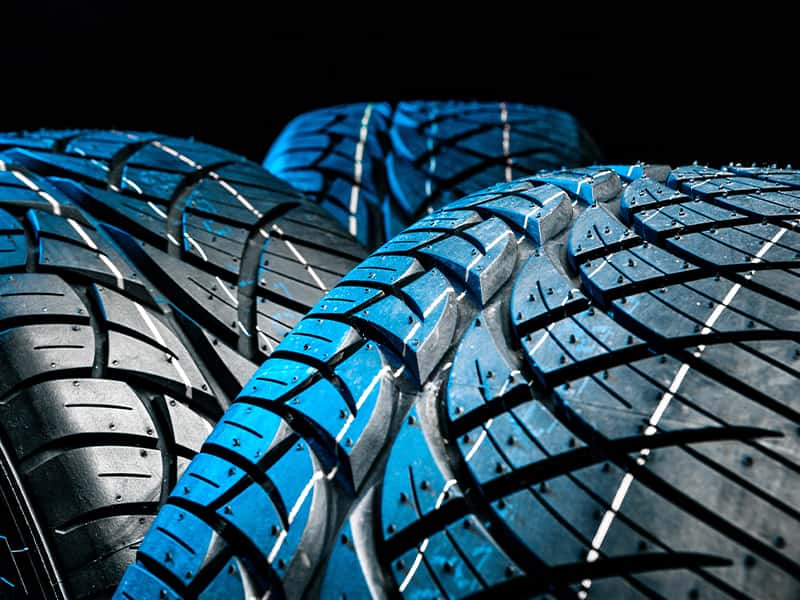
What Do 4 Tires Cost?
The big question first. For most vehicles, a full set of four tires installed and ready to go runs between $400 and $1,200, with most people landing in the $600 to $900 range. That is a wide spread, so here is what moves the number.
A lot of it comes down to what you drive. A smaller sedan usually runs $500 to $900. An SUV or crossover, which is what a lot of us are driving around here, lands closer to $700 to $1,200. Trucks tend to cost more because they need bigger tires built to carry heavier loads.
The quality tier matters just as much, and this is where people either overspend or cut a corner they regret. Budget tires run about $400 to $700 for the set. Mid-range tires, which are the right fit for most everyday driving, run $700 to $1,100. Premium and performance tires climb to $1,100 to $1,800, and a set for a luxury SUV or sports car can pass $2,000 once installed.
One heads-up: tires have gotten more expensive lately. A lot of them are imported, and tariffs on those imports have pushed prices up. So if they feel pricier than the last time you bought, you are not imagining it.
Want to know exactly what your vehicle needs before you shop?
Learning to read your tire’s sidewall is the first step. Our guide on how to read a tire walks you through every number and letter.
The Costs That Are Easy to Forget
Here is the part that catches people off guard. The price on the tire is just the tire. Getting it onto your car costs a bit more, and that is completely normal, so the bottom of the receipt should not be a surprise.
Installation usually runs $15 to $35 per tire. That covers mounting the tire, balancing the wheel so the ride is smooth, a new valve stem, and disposing of your old tires.
This is one place it pays to know what is included. When you buy a new set of tires at Walser, you get free tire rotations for as long as you own them. That matters for two reasons. Rotating your tires regularly is one of the simplest ways to make them wear evenly and last longer, and it is often required to keep your mileage warranty valid. Having it built in means one less thing to budget for and one less reason a warranty claim gets denied down the road.
Alignment is a separate service, typically $80 to $200. You do not need it with every tire change. But if your old tires wore down unevenly or the car pulls to one side, it is worth doing. There is no point buying four new tires and letting them wear out crooked because the car is out of alignment.
Add it all up and that is why the final total is higher than four tire prices on their own. Nothing shady about it, just the full picture.
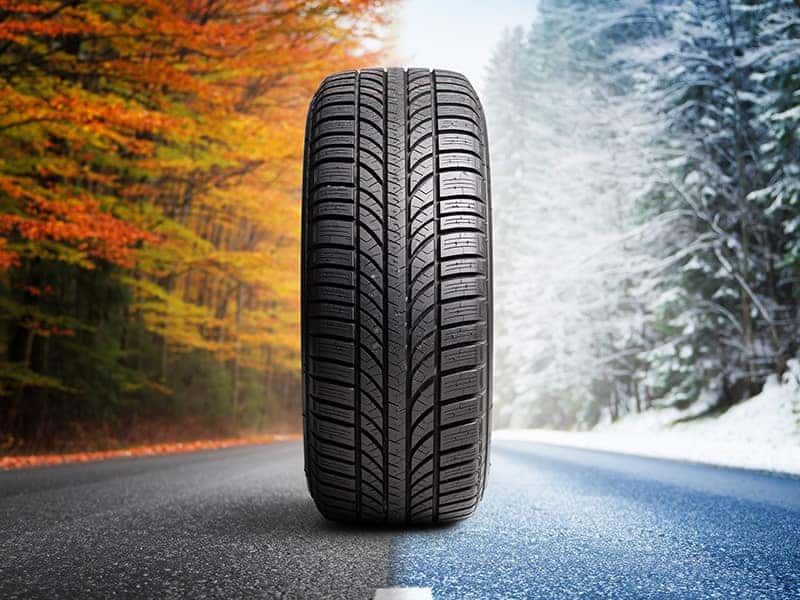
How Long Should Tires Last
Good tires are built to last 50,000 to 90,000 miles. Plenty of everyday all-season tires will comfortably get you past 65,000 if you take reasonable care of them.
But mileage is only half the story, and this is the part that surprises people: tires age even if you barely drive. The rubber breaks down over time regardless of use, and the safety guidelines recommend replacing tires around six years old no matter how much tread is left. So if you are a low-mileage driver, do not just judge by the tread. Age counts too.
Want to get the most out of them? Rotate them, keep the air pressure where it should be, get the alignment checked, and go easy on hard braking. All of that genuinely adds miles.
About That Warranty (Worth Reading Closely)
Almost every tire comes with a mileage warranty, often 50,000, 60,000, or even 80,000 miles. It sounds like a promise the tire will last that long. The reality is a little different, and this is the part most worth understanding.
The warranty is typically prorated, which means you do not get a free replacement. Say a tire is warrantied for 40,000 miles and wears out at 32,000. You do not get a new tire. You get a credit based on the miles you missed, which might come out to around 20 percent of what you paid. It softens the cost, but it is not a freebie.
There is a time limit alongside the mileage. Most of these warranties expire at four, five, or six years from purchase, whichever comes first. So if you only drive 5,000 miles a year, a five-year warranty could run out well before you reach the mileage, with plenty of tread still left. That is simply how they are written.
You have to hold up your end. Keeping the warranty valid usually means rotating your tires on schedule and keeping the records. If a tire wears unevenly because of a skipped rotation or an alignment issue, the claim can be denied. So hang onto your receipts.
A couple more quick things. The mileage warranty only covers replacement tires you buy, not the ones that came on the car from the factory. And it generally only covers the original buyer on the original vehicle.
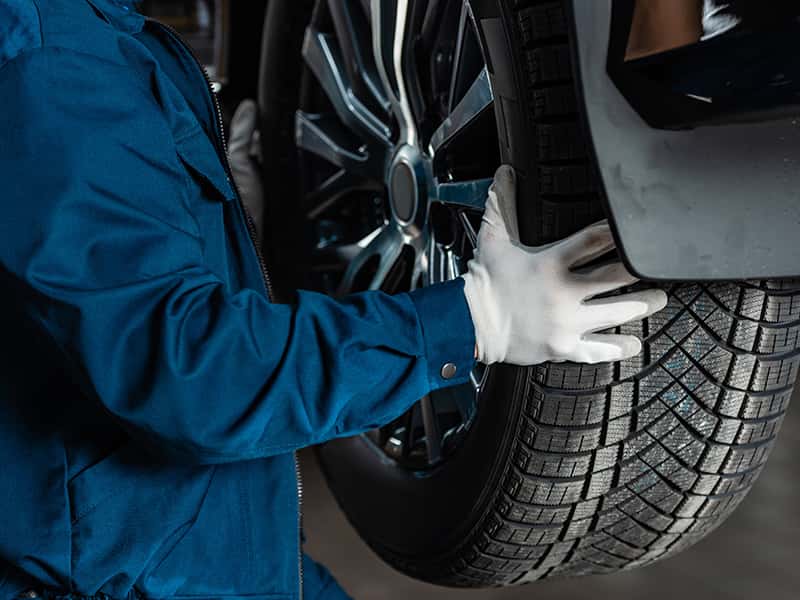
Nails and Potholes Are a Different Story
That mileage warranty only covers normal tread wear. It does nothing for a nail in the sidewall or a pothole that ruins a tire come March. That kind of damage falls under road hazard protection, and at Walser, that is where WalserCare comes in. It is built to cover the stuff the road throws at you, the debris, potholes, glass, and impacts that can leave a tire beyond repair. If you drive a lot of highway miles or your roads are rough, it is worth asking about when you buy your set.
Winter or All-Season? The Minnesota Question
Living here, this is the choice that actually matters. All-season tires are the default that come on most vehicles, and the name is a little misleading. They handle dry roads, rain, and light snow just fine, but they are built as a do-everything compromise. Once the temperature really drops and the roads get packed with snow and ice, their rubber stiffens up and they lose grip.
Winter tires are a different animal. The rubber stays soft in the cold so it keeps gripping, and the tread is designed to bite into snow and clear slush. If you have ever white-knuckled it up an icy hill in January, you know the difference is not subtle. The tradeoff is that they wear down fast on warm, dry pavement, so they are not meant to stay on year round.
For a lot of Minnesota drivers, the smart move is two sets: all-seasons for spring through fall, winters for the cold months. Yes, it is more tires up front. But you are not wearing out one set faster by running it year round, so the two sets each last longer and you get the right grip in every season. If you do a lot of highway driving or want sharper handling, that is also where you would look at a performance-oriented tire, though those trade away winter capability and tread life for grip.
The one hassle with running two sets is figuring out where to put the ones you are not using. A set of tires takes up real space in a garage, and not everyone has it. That is where Walser tire storage comes in. At most Walser locations you can leave your off-season set with us, we hold them safely, and we swap them on at the right time of year. No tires stacked in your garage, no hauling them back and forth and having your car smell like tires, and they are ready when the season turns.

The Bottom Line
Tires are the only part of your car actually touching the road, so it is worth getting right. Budget for the whole number, not just the tire price. Think about how much you drive and how long you plan to keep the car, since both the miles and the age tell you when it is time. And take the warranty for what it is: useful protection with real limits, not a blank check.
And if you are not sure what your vehicle needs or which tier makes sense for how you drive, just ask. A good service team is not trying to push you toward the most expensive set on the wall. They are trying to get you on the right tires so you are safe and getting solid value for the miles ahead. That is the whole point.
Find Tires Near You
Whether you are in the Twin Cities, White Bear Lake, or anywhere in between, there is a Walser service center close by ready to get you set up. Find tires near you and book a time that works.
 Avoid the Sticker Shock. Buy Now Before Tariffs Take Effect! March 31, 2025 Major auto tariffs are set to take effect on April 3, and industry experts predict that new vehicle prices could rise by thousands. If you’ve been thinking about buying a…
New Vehicles, News, Used Vehicles
 5 Signs You Need Brake Service (And What It Costs to Wait) August 7, 2026 Brake problems don't announce themselves loudly until they're serious. A small issue left unaddressed can quickly become an expensive repair. But here's the good news: if you catch the warning…
Service, Tire Changes & Replacement
 First-Time Car Buyer Guide: Budget, Financing, and What to Bring September 25, 2026 Nobody teaches you how to buy a car. You turn a certain age, need a vehicle of your own, and suddenly you're supposed to know what an APR is and…
How-to, New Vehicles
 What’s in My Budget: Finding a Vehicle Priced Under 10K June 25, 2024 Are you in the market for a new ride but working with a tight budget? No worries! Finding a reliable and affordable vehicle priced under $10K is possible, and we’re…
Under 10k, Used Vehicles